Fungibility vs Non-Fungibility
Fungibility is used to describe whether an asset is able to be replaced by an identical unit of the same asset. Many traditional currencies are fungible. One dollar is exchangeable for another dollar. So too is most cryptocurrency.
Non-fungible assets are quite different. Each unit has a unique characteristic that makes them non-exchangeable. For example, a piece of art, a concert ticket that indicates a particular seat number, or a rare collectible trading card cannot be traded on a one-for-one basis with another of the same type without consideration being given to value and/or attribute differences.
As such, NFTs apply the non-fungible model to blockchain environments.
Understanding the Difference in Practical Terms
The following distinctions show why NFTs are used the way they are:
- A fungible asset may be traded for another identical unit of the same asset without any loss of value.
- A non-fungible asset will have characteristics that distinguish it from all other units of its kind.
- Cryptocurrencies, such as Bitcoin or Ether, are considered fungible since each unit is equal to every other unit of the same type.
- NFTs are non-fungible because each token is assigned a unique identifier and is recorded on a blockchain.
What Makes an NFT Unique
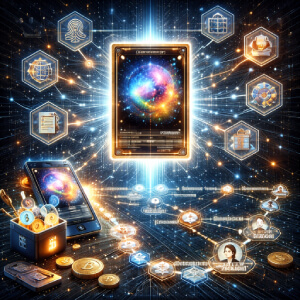
The NFT is stored on a blockchain as a token. Each token has a unique identifier (ID) and there is a smart contract governing the behavior of this token and how it may be transferred from one entity to another. Additionally, some contracts will also govern the distribution of royalties on sales of the token.
Unique identifiers are managed at the protocol level. The blockchain will prevent duplication of a given token ID within a particular contract. The ownership of the token is tied to the wallet address controlling the private keys associated with the address.
Each time you transfer an NFT, the blockchain creates a permanent record of the transaction. Anyone can verify the current owner of the NFT and review the entire transaction history for the NFT.
The uniqueness of an NFT does not prohibit the copying of the file associated with the token. What it means is that only one wallet address can claim to have the official token defined by the smart contract.
Token Standards: ERC-721 and ERC-1155
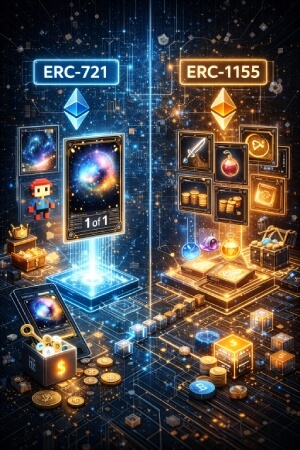
Most NFTs today are built using existing token standards. The most commonly used token standards in use today on the Ethereum Network are ERC-721 and ERC-1155.
ERC-721 is one of the first standards developed specifically for the creation of non-fungible tokens. It establishes a structure in which each individual token is treated as unique and individually tracked. The standard outlines several required functions, such as the ability to transfer a token and the ability to check who owns a token.
ERC-1155 was developed as a more flexible standard than ERC-721. It permits the development of a single smart contract that manages both fungible and non-fungible tokens. The benefits of developing with this standard include lower transaction costs and easier management of assets; particularly in gaming applications and other multi-token projects.
How These Standards Differ
- ERC-721 assigns a unique token ID to each asset and treats each token independently.
- ERC-1155 permits the inclusion of multiple token types in a single contract; including both unique tokens and tokens that are considered identical.
- ERC-1155 provides the capability to batch multiple transfers into a single transaction resulting in improved efficiencies.
- Both standards provide a framework for recording ownership and transfers to the blockchain.
Smart Contracts and Ownership Rules
Smart contracts are programs deployed on a blockchain that are executed automatically as per pre-defined rules. NFTs are reliant upon these contracts for defining ownership, permissions to transfer and any other required logic.
Upon minting an NFT, the smart contract generates a new token ID and assigns it to a particular wallet address. Subsequently, any subsequent changes in ownership occur only when the present owner of the NFT uses their private key to authorize a transfer.
In addition to managing the ownership function, many smart contracts also manage the metadata function. Metadata is used to connect the token to descriptive information regarding the asset.
Since smart contracts operate on decentralized networks, no one entity has the ability to alter the ownership records of an NFT once the transactions have been verified by the network. Attempting to alter any historical data would necessitate altering the entire blockchain, which is computationally impractical on major blockchains.
Metadata and the Link to Digital Assets
NFTs typically do not store the high resolution images or video files themselves on the blockchain. This is due to storing such large files on-chain would be both expensive and inefficient. The NFT will include a link to where the file can be located (metadata).
Some common types of metadata that may be included with an NFT:
- Name of the asset
- Description of the item
- URL to an image, animation, etc.
- Attribute/traits of the item to define its characteristics.
Metadata can be stored in different manners. Projects may utilize decentralized storage networks while some projects will utilize traditional web servers.
The NFT token will contain a reference to the metadata. Upon displaying the NFT within a user's wallet or on a marketplace, the system will read the metadata to locate and retrieve the associated file.
How Ownership Is Recorded On-Chain
Blockchain Networks are maintained through a Distributed Ledger System. All transactions (involving an NFT) made within the Blockchain Network are entered into this Distributed Ledger System. The Distributed Ledger System is stored across many different nodes within the Blockchain network, thus providing resistance to tampering.
Ownership is established when an address (that corresponds to a Cryptographic Key Pair) is listed as the current holder of the token ID. The private key associated with this cryptographic key pair enables the owner to authorize the transfer of the NFT.
Each transfer request sent to the Blockchain is verified. If the signature (associated with the current owner's address) matches the private key associated with the current owner's address, then the transaction will be processed. Once the transaction is processed, the ledger will be updated to show the new owner of the NFT.
Core Elements of On-Chain Ownership
- The contract address and token ID of each NFT uniquely identifies it.
- Ownership of an NFT is associated with a Blockchain wallet address.
- Transfers of an NFT require the use of a digital signature by the current owner of the NFT.
- The transaction history of all transfers made regarding a particular NFT will remain publicly visible within the blockchain network.
This transparency also means that anyone can verify who currently owns a particular NFT and see a list of the prior owners (through the public visibility of the Blockchain).
Right-Click Saving and Common Misconceptions
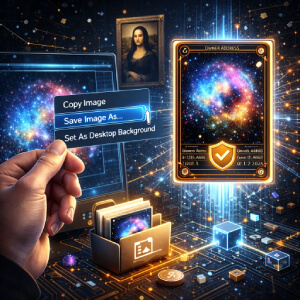
One of the most commonly cited criticisms of NFTs surrounds the concept that if you right click ‘Save As’ on an image associated with a particular NFT, then you own that NFT. While it is technically possible to do so with publicly accessible images, saving a file does not constitute transferring ownership of the NFT. The Blockchain record remains unchanged, and the saved file is merely a copy of the image with no token attached to it.
The NFT represents the official entry in the ledger that associates the asset with the ownership confirmation within the Blockchain system.
This situation is analogous to viewing a famous painting online; while you may have a digital copy of the painting, having such a copy does not grant you ownership of the original artwork. The NFT system applies this same logic to digital-native assets.
Ownership of an NFT may provide additional rights related to the project which created the NFT, however, there is no automatic assignment of copyright, unless the project specifically states otherwise.
Use Cases Beyond Artwork
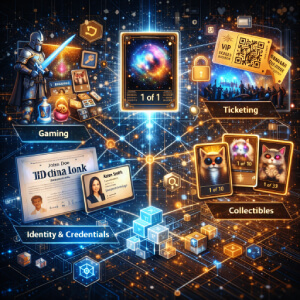
While NFTs were primarily created to bring attention to NFTs, the NFT structure has many other uses beyond just bringing awareness to NFTs.
For example, in gaming, NFTs can provide players with unique items; in ticketing systems, NFTs can provide proof of ticket purchase and thus provide the owner with rights to enter an event (i.e., access); in identity frameworks, NFTs can serve as proof of qualifications, i.e., education, work history, etc.
One of the advantages of NFTs is that they can be programmed to have additional features such as: limit the number of copies of an item, allow for automatic royalty payments to creators upon sale, provide for a specific time period after which the NFT will expire, etc.
Furthermore, because of the flexible nature of the ERC-1155 token standard, it is possible to create a single system where both unique (1-of-1) and semi-fungible (e.g., collectibles) assets can exist together.
Security Considerations
One of the primary concerns with NFT ownership is how secure the user's wallet is. If a user's private key is compromised, then the associated NFTs can be transferred from the compromised account to another wallet without the original owner's consent. As a result, most users use hardware wallets or other secure storage options for their NFTs.
Additionally, it is essential to ensure that the smart contract used to create the NFT is free of errors, since a vulnerability in a contract can lead to loss of NFTs. Smart contracts are difficult to modify once they have been deployed.
While blockchain provides a level of transparency to transactions (i.e., all transactions are publicly viewable), users must still verify that the address they are using is the correct address for the project they wish to interact with, and further that the project is legitimate.
Interoperability and Ecosystem Growth
Since NFT standards are publically defined, multiple platforms can support the same NFTs. Wallets, marketplaces, and decentralized applications (dApps) can communicate with each other using compliant smart contracts.
This interoperability creates secondary markets. Users can sell NFTs on multiple platforms if those platforms support the same standards.
Ultimately, ecosystem growth relies on the standardization of NFTs. If there was no standardization, NFTs would never move out of a single application, and the value of creating an NFT would be lost.
Legal and Intellectual Property Considerations
There is no automatic right of ownership of the full Intellectual Property Rights in respect of an NFT. The rights that an owner will have will depend upon the license granted to them by the creator of the NFT.
While some NFT creators may grant the purchaser of the NFT the ability to commercially utilize the related artwork; others may restrict the purchaser's rights to simply being able to display the artwork personally or sell the artwork at a later date.
It is essential for purchasers of NFTs to read and review the terms and conditions (and/or other documentation) provided by each individual project to determine exactly what they will be entitled to as a result of purchasing the NFT. While the blockchain will confirm that the buyer owns the token, the scope of rights that exist under law will need to be established independently of the blockchain.
The Bigger Picture Behind NFTs
NFTs offer a methodical way of recording ownership of unique digital content via a blockchain. In addition to illustrating the difference between fungible and non-fungible, NFTs show why they are uniquely suited to recording ownership of distinct items rather than units of interchangeable currency.
The NFT standards (e.g., ERC-721 and ERC-1155) provide guidance on how to implement and manage NFTs. Smart contracts define the behavior of NFTs. Metadata allows users to link NFTs to the digital files associated with them. All transactions relating to NFTs are recorded transparently on the blockchain using cryptographic verification.
A common source of confusion surrounding NFTs arises from the misconception that the digital file itself is the same as the token. This is not the case. If you create a copy of an image, the blockchain record will still indicate that the original owner has retained their ownership of the NFT. The NFT is linked to the specific wallet address of its owner.
As blockchain technology continues to advance, the use of NFTs to demonstrate that ownership of digital content can be verified, transferred and administered without the need for central intermediaries will grow. Understanding the basics of NFTs will help individuals distinguish between the technical aspects of NFTs and speculation, and also provide clarity about the role that NFTs play in larger blockchain ecosystems.