What is an NFT
NFTs have been around since 2014, with Quantum being the first-ever NFT made. NFTs are a niche part of the crypto industry.
At its core, an NFT is a unique, one-of-a-kind digital certificate stored on a blockchain. Unlike a Bitcoin token, which is "fungible" (interchangeable like a dollar note), an NFT is proof of ownership of a specific item like digital art, a virtual plot of land, or a professional credential.
These NFT assets represent how the digital world values items, moving us away from temporary licenses and toward true, verifiable digital ownership.
What Does Digital Identity Mean
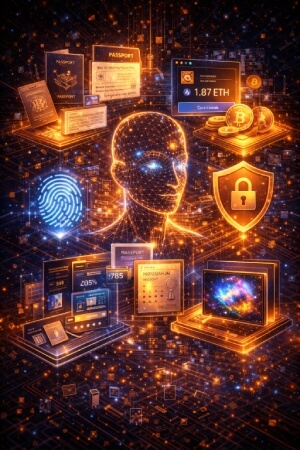
To the average person, your digital identity is how you can be recognized in the digital world, but in today's world, it is much bigger than that. Your digital identity is no longer just a username or a static profile on a social media site; instead, it is a dynamic, portable system of data that defines who you are across the internet.
It encompasses your reputation, your transaction history, and your verifiable credentials. It is the digital equivalent of your passport, credit score, and birth certificate combined into a single, user-controlled package.
In the world of digital finance, your digital identity is your most valuable currency. When you connect a wallet to a decentralized exchange or an NFT marketplace, your identity is your account. Because there are no centralized gatekeepers to reset a password, your identity and your assets are inextricably linked, creating an environment that operates without the traditional financial safety nets.
If your digital identity is compromised through a stolen private key or a phishing scam, a bad actor gains total control over your financial life. Therefore, protecting this identity is not just a chore, it is a vital act of self-defence.
In an era where your reputation and your net worth are stored in the same digital vault, it is paramount to protect your digital identity because a vulnerable identity opens doors for exploitation.
Common Threats to NFT Assets and Digital Identity
Although the digital and crypto economy offers a lot of financial freedom and anonymity, it also carries significant risks. Given that blockchain transactions are irreversible, a single mistake can lead to the permanent loss of both your financial assets and your online reputation.
Here are the primary threats currently facing NFT holders and their digital personas:
Wallet Security and Private Key Theft
The most fundamental threat is the loss or theft of your private key or seed phrase.
In the world of NFTs, your wallet is the official proof of your identity. If a hacker gains access to your recovery phrase, they have the final word on your assets. Common threats include:
- Keystroke Loggers: Malware that records what you type, capturing passwords or seed phrases.
- Cloud Storage Leaks: Storing your recovery phrase in a digital note or a photo, which can be compromised if your email or cloud account is hacked.
Phishing Risks
Phishing remains the most common way hackers steal assets. Scammers create near-perfect replicas of popular NFT marketplaces or wallet providers to trick you into entering your credentials.
There is also a more sophisticated version known as ice phishing. Here, you aren’t asked for your password, instead, you are tricked into signing a transaction that looks routine but actually grants the attacker permission to transfer all the NFTs in your wallet to their own.
Fake Collections and Impersonation
The ease of creating NFTs means that scammers often copy and paste successful projects to deceive unsuspecting individuals. They create fake collections that use the same names, descriptions, and artwork as famous projects like Bored Ape Yacht Club or Azuki.
Scammers also use a technique called wash trading where they will buy and sell their own fake NFTs to create a reliable reference, tricking unsuspecting buyers into thinking the collection is legitimate and valuable.
Smart Contract Vulnerabilities
Even if your wallet is secure, the code governing the NFT itself might not be. Some of the smart contract vulnerabilities scammers use include:
- Backdoors: Malicious developers can hide code in a smart contract that allows them to mint infinite tokens or withdraw all the funds from the project’s treasury.
- Logic Flaws: Sometimes, even well-intentioned code has bugs. If a contract isn't properly audited, a hacker can exploit these flaws to drain the assets held within the contract or the wallets connected to it.
Marketplace and Social Media Scams
Marketplaces and community hubs like Discord are frequent targets for social engineering. NFT holders can be deceived using Discord hacks, where if a project moderator's account is compromised, the hacker can post a surprise mint link to thousands of followers.
Because the link comes from a trusted source, many users click it without verifying the real facts, leading to drained wallets.
Scammers may also use bidding scams. They will place a high bid on your NFT in a different currency (e.g., USDC instead of ETH) or quickly switch the bid amount right before you click accept, hoping you won't notice the change in the user interface.
Steps to Secure Your Digital Assets
Protecting your digital assets and identity requires more than just a strong password. You must have a secure way of interacting with the blockchain.
A good routine includes keeping your private keys safe and not on cloud storage because in decentralized finance, there is no button to recover your password or passkeys in this instance, when you forget them. The next segment explores a few ways to secure your NFTs and digital identity.
Hot vs. Cold Wallets
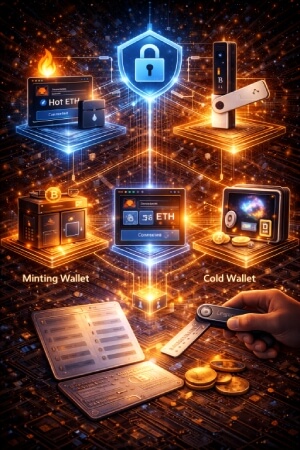
The first step in securing your vault is understanding the difference between hot and cold storage.
Hot wallets are software-based applications (like browser extensions or mobile apps) that stay connected to the internet. They are incredibly convenient for quick trades or daily interactions, but their constant connection makes them vulnerable to malware and phishing attacks.
In contrast, cold wallets (hardware wallets) are physical devices that store your private keys offline. These devices provide a much more secure environment because they are not reachable by hackers over the internet.
To sign a transaction, you must physically press a button on the device. For any long-term holdings or high-value NFTs, cold storage is the industry standard for a reliable safety net.
The Multi-Wallet Philosophy
To minimize risk, experienced NFT collectors use a compartmentalized approach. This means that instead of keeping everything in one place, you split your assets across three distinct types of wallets. These wallets include:
- The Minting/Burner Wallet: This is a temporary hot wallet containing only a small amount of funds. You use this for interacting with new, unverified projects or minting NFTs from unknown websites. If the site turns out to be a scam, the hacker only gets the small amount in that specific wallet, leaving your main assets untouched.
- The Warm Wallet: This is your primary trading account. It holds assets you plan to sell or trade for medium periods. It offers a balance between security and accessibility.
- The Cold Wallet: This is your vault. It should never be connected to unverified websites. It holds your most valuable NFTs and long-term investments. By keeping these assets disconnected from daily trading activity, you drastically reduce the chance of an accidental ice phishing drain.
Seed Phrases
Your seed phrase (the 12 or 24 words generated when you create a wallet) is the main form of security for your assets. If someone else, apart from you, has these words, they have unrestricted access to your account.
Most modern thefts occur because users practice poor seed phrase hygiene. Never store your recovery words in a cloud service, a digital note, an email, or a screenshot. These are easily compromised if your phone or computer is hacked. The only truly safe way to store a seed phrase is offline, either written on paper or engraved in metal, and kept in a secure, physical location.
New Technologies Used in Protecting Your Digital Identity
Your digital identity is now as valuable as the assets themselves. NFT Domains (like those from ENS or Unstoppable Domains) act as your universal username across the web.
Instead of a long, confusing string of characters, people can send assets to "yourname.eth." Knowing that this domain represents your entire on-chain reputation, it must be protected like a physical deed to a house.
To fully protect people’s digital identities, we are now seeing a move toward Decentralized Identifiers (DIDs) and Self-Sovereign Identity. Instead of using "Login with Google" or "Login with Facebook", where a corporation owns your data, you use your wallet to prove who you are.
This is also enhanced by Verifiable Credentials (VCs). These VCs are digital records of your passport or documents that help you prove certain claims on the internet. By combining these VCs and zero-knowledge proofs, you can prove things about yourself (like that you are over 18 or live in a certain country) without actually revealing your private data.
This technology creates a more private, secure world where you own your identity and your assets simultaneously.
Best Practices for Protecting Your Digital Assets
The trick to ensuring that your assets are always secure is to build good safety habits. Instead of being reactive, you're proactive in taking steps that secure your assets in the absence of threats or attempted scams.
Some practices you can use include:
The Five-Minute Rule
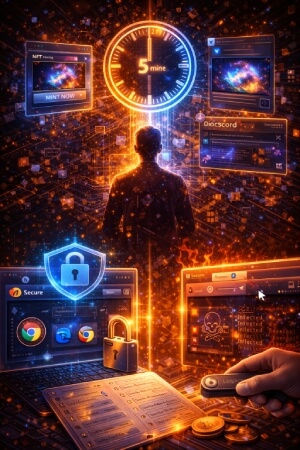
In the high-speed world of NFT launches, scammers rely on FOMO (Fear Of Missing Out) to trick users into making mistakes. The Five-Minute Rule is a simple but effective safety net to protect you in the heat of the moment.
For example, never sign a transaction during a hype moment. If a surprise mint or a limited giveaway appears, step away for five minutes. Use this time to verify the link across three independent sources, such as the project’s official website, their verified X (Twitter) account, and their Discord announcements. If it’s a scam, the community will usually flag it within those five minutes.
Browser Hygiene
One of the most overlooked threats is the browser itself. Malicious extensions or cached scripts from browsing unprotected sites intercept your transactions.
For high-value actions, practice strict browser hygiene. Use a dedicated, clean browser (like a separate Chrome profile) that has zero extensions other than your wallet to perform transactions. Never use this specific browser for general web surfing or clicking on social media links.
This compartmentalization ensures that a stray click on a suspicious site doesn't compromise your financial vault.
Staying Safe in the NFT Ecosystem
Securing your NFTs and digital identity isn't a one-time thing, it should be a routine of careful habits that helps you be proactive whether or not your assets are in danger.
As the digital economy continues to move beyond traditional finance systems, the responsibility of protection sits squarely with the individual. While this can feel like a heavy burden, you can employ simple tips and tools to protect yourself.
Secure your private keys and don't store them as screenshots or in the cloud. Write them on paper or safely store them offline. Don't rush into giveaways or to buy trendy NFTs.
Recheck wallet addresses, confirm links from Discord servers or creators. By implementing these tips and relying on cutting-edge technology, you can safeguard your digital identity from risks.