Rarity Attributes and Scarcity Mechanisms
NFT collections are created by generative algorithms to generate thousands of tokens with different characters. These characteristics can be visual in nature like background colours, accessories, clothing or expression. Each characteristic has a probability which implies that a few combinations are much less common than the other.
Rarity ranking tools evaluate the frequency of occurrence of a certain trait in a collection. An item having several low frequency characteristics can score well on rarity charts. These statistical differences impose internal scarcity due to the limiting factor of the supply being the mint.
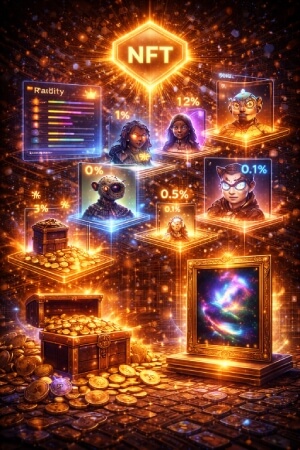
Rarity, however, does not necessarily mean value. Even the most luxurious token can be hard to find customers, in case the general collection is not popular. Value can only be increased neither when there is no market demand nor when a good is in the market.
Absolute Scarcity as Opposed to Effective Scarcity
Absolute scarcity is the set total number of provisions written in a contract. One example is a collection of 10,000 works. The latter cannot be minted more than it was specified in the contract unless the contract specifies further minting.
The ability to scarify some is however determined by the number of tokens being sold. In case a high proportion of holders decline to list their NFTs, circulation supply is limited. The lower supply has the potential of improving the competitive bidding amongst buyers who are interested.
Through sound scarcity is changeable in a short period. When markets are in a bullish mode, holders can withdraw listings until they can have higher prices. When the market is bearish, an increase in the number of tokens could endanger the forces of scarcity.
Unique Digital Works / One-of-One Editions
One-of-a-kind NFTs are run under varying scarcity parameters. Value is determined by artistic distinction, craftsmanship and the context of the story, rather than through algorithmic rarity. In the case of unique pieces, provenance takes centre stage. The overall ownership history is recorded in blockchain.
In case there is a reputed collector who had owned the piece in the past, the reputation can be transferred and hence the perceived value of the piece can rise. In such instances, scarcity is absolute by nature, yet demand is heavily contingent on mindfulness and influence of the culture by the creators.
Creator Reputation and Brand Equity
NFTs greatly depend on the reputations of their creators. Once a well-known artist is introduced to the space, they come with their past history and fan base. Credibility would benefit with institutional recognition, gallery representation, or media coverage.
People tend to have a greater sense of security buying a product of creators who have achieved a successful career since it seems more likely to be involved in the long term. Brand equity eliminates confusion. It is an indication of uniformity, devotion and style.
Project Teams and Roadmap Criminalization
Reliability of the development team affects the value perception in the large-scale NFT projects, and particularly in profile picture collections. Trust rises with publicity about the founders, open communication, and roadmaps. Actions are more valuable than words.
Products or partnership projects that roll out utilities, updates on products over time have a better resistance to price. On the other hand, it takes a relatively short time to lose the confidence of the market to abandoned roadmaps or extended silence.
Narrative and Cultural Relevance
The film incorporates the cultural customs of the era, causing it to appear relatable to contemporary society. NFT collections usually flourish on narratives. Great storytelling based on digital identity, internet culture, gaming ecosystems, or artist experimentation produces emotional involvement.
Timing is also important in culture. The projects that fit in overall digital movements or social trends can have an enduring interest. Narrative coherence is able to increase value beyond trait rarity. In instances where a collection turns into a culturally meaningful thing, the tokens of the collection can act as artifacts of a certain age in internet history.
Community Reinforcement and Network Effect
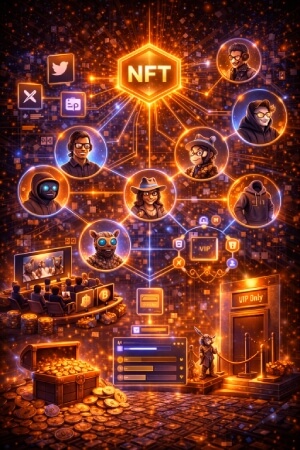
One of the strongest forces used to calculate the value of NFT is the community. A hectic community is one that creates talk, happenings, partnerships and social materials that strengthen visibility. The powerful communities generate shared identity.
Owners are united to something greater than personal ownership. Active chats, event participation as well as user-generated content are usually engagement metrics which are associated with prolonged interest.
The Dynamics of Social Signalling and Status
Some NFTs are utilized as digital status symbols. Possession of a certified set may denote belonging to a certain system. Status value increases demand in case powerful people embrace a collection. Cascading interest can be generated by visibility in social platforms. Such signalling mechanism introduces intangible value which traditional financial models might be missing.
Utilizations and Membership Access
There are NFTs that provide membership to special communities, events access, merchandise releases, governance voting, or in-game assets. Utility adds more value to the ownership outside its visual appearance. Utility should however be sustainable.
Any short-lived incentives can cause temporary price spurts, but repeated delivery needs to be performed to achieve long-term effect. Access value is based on the sustainability of the experience generation by the community.
Liquidity and Market Structure
The liquidity is the level at which an NFT can be purchased or sold. The high trading volume collections usually can be easily entered and exited without a notable slippage in price. Illiquid collections can exhibit big bids between the listing prices and buyer bids.
This raises doubts about pricing. Perceived risk depends on liquidity. Customers tend to buy the assets that are easy to resell.
Patterns of Distribution and Floor Price
The lowest price of NFTs in a collection is known as the floor price. It is a market sentiment indicator. Floor price however does not give complexities of distribution. There are collections with heavy concentration of around the floor, and there are those with spacious spread as per rarity.
The information about the distribution of listings between price ranges also gives a deeper insight as compared to attention to the cheapest available token.
Past Sales History and Trend Analysis
The History of sales provides valuable background information. Analysts look into average price of sale, change in volume and the period of holding. The steady increase in the volume and the average price can be evidence of the increased demand.
A negative trend in volume may indicate a loss of interest. The past does not determine what will happen tomorrow, but it assists in putting the present pricing into context in comparison to the past performance.
Market Cycles and Macroeconomic Environment
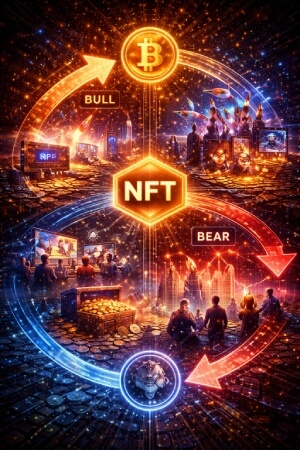
The activity of NFTs frequently coincides with the trends of cryptocurrency. Bull markets are associated with an increase in the purchasing power and risk appetite due to the rise in crypto wealth. In bear markets, preservation of capital becomes an agenda.
The speculative assets and the liquidity are strained. This can be explained by analysing macro conditions which explain why even powerful projects can be negatively affected by wider downturns.
Speculative Momentum and Hype Cycles
The NFT markets have a strong reaction to narrative hype. Rapid demand swings can be produced by social media amplification, endorsements by influencers, and virality.
There can be speculative push that causes the price to be above fundamentals, at least temporarily. Nevertheless, corrections can be fast when the hype is over. Diffuse ownership and thin order books enhance volatility.
Wider Digital Property Adoption
NFT value over time is linked to general patterns in digital ownership. All applications into gaming systems, virtual worlds and identity systems could increase application. With the development of the blockchain infrastructure, there is a potential that NFTs will find new functional layers. This development may favour the long-term requirement, and not speculative trading.
Emotional Drivers and Behavioural Economics
- Fear of Missing Out: Prices of NFT are dependent heavily on psychological drivers. Fear of missing out is a quick decision maker, particularly when it's holding a mint cause or going viral. A scarcity and countdown timers augment urgency. Valuations can be artificially pumped up, at least in the short run, by emotional buying.
- Loss Aversion and Holder Psychology: Most holders do not like to sell at less than the time of purchase. This is able to slow down the available supply and provide interim stability at the floor. The same can happen though should sentiment change drastically, cumulative listing can be seen at once, which would boost downward action. Prejudice in behavior determines the forces of the market just like economic fundamentals.
Trading and Rising Risk and Speculation
There is less liquidity in the NFT markets compared to the traditional equities. One big transaction may have a substantial market value change. This sensitivity leads to extreme price swings. The fundamental aspect that buyers and sellers ought to be aware of is that volatility is a structural and not an accidental phenomenon.
NFT markets have no standard valuation patterns. Data is located on social networks, blockchain space scanners, and trading platforms. Assets that have been mispriced can be discovered by the participants who conduct in-depth research. On the other hand, ignorant consumers can pay too much at the time of hype cycles.
Sustainability and Long-term Value Signals
Projects that develop past initial mint events have commitment. Value perception is enhanced by partners, ecosystem tools and upgrades in technology. Innovation implies resiliency. Projects that are not dynamic could become irrelevant.
The NFTs that are embedded into games, metaverse worlds, or brand ecosystems can receive a wider spread. The platform utility can enhance the potential channels of demand that are capable of sustaining long-term value stability.
With the increasing online presence of economic activity the digital identity and verifiable ownership may gain greater relevance. The fact that many NFTs follow the transformations in the structure of media distribution, the game economies, and the decentralization of identity models may be helpful in the context of increasing adoption trends. The value in the long-term is founded on long-term relevancy and not trivial speculation.
The Forces Behind NFT Value
NFT value is formed due to a complicated interaction of rarity mechanics, creators reputation, community interaction, liquidity states, previous sales records, and macroeconomic cycles. The price is determined not by a single factor.
Rather, value is a collective phenomenon that depends on scarcity, cultural resonance, network effects and timing. The new digital markets are volatile by nature. Price swings are enhanced by thin liquidity, momentum and emotional behavior.
Meanwhile, digital ownership, blockchain infrastructure, and community-driven ecosystem trends might have structural backing of some projects over the long term. The interaction of rarity, reputation, liquidity, and market cycles will provide a more effective structure of interpreting the NFT pricing dynamics. Although one cannot be sure, a systematic analysis of these variables offers the idea of the way in which the digital asset value is created and changes over time.
With the kind support: